
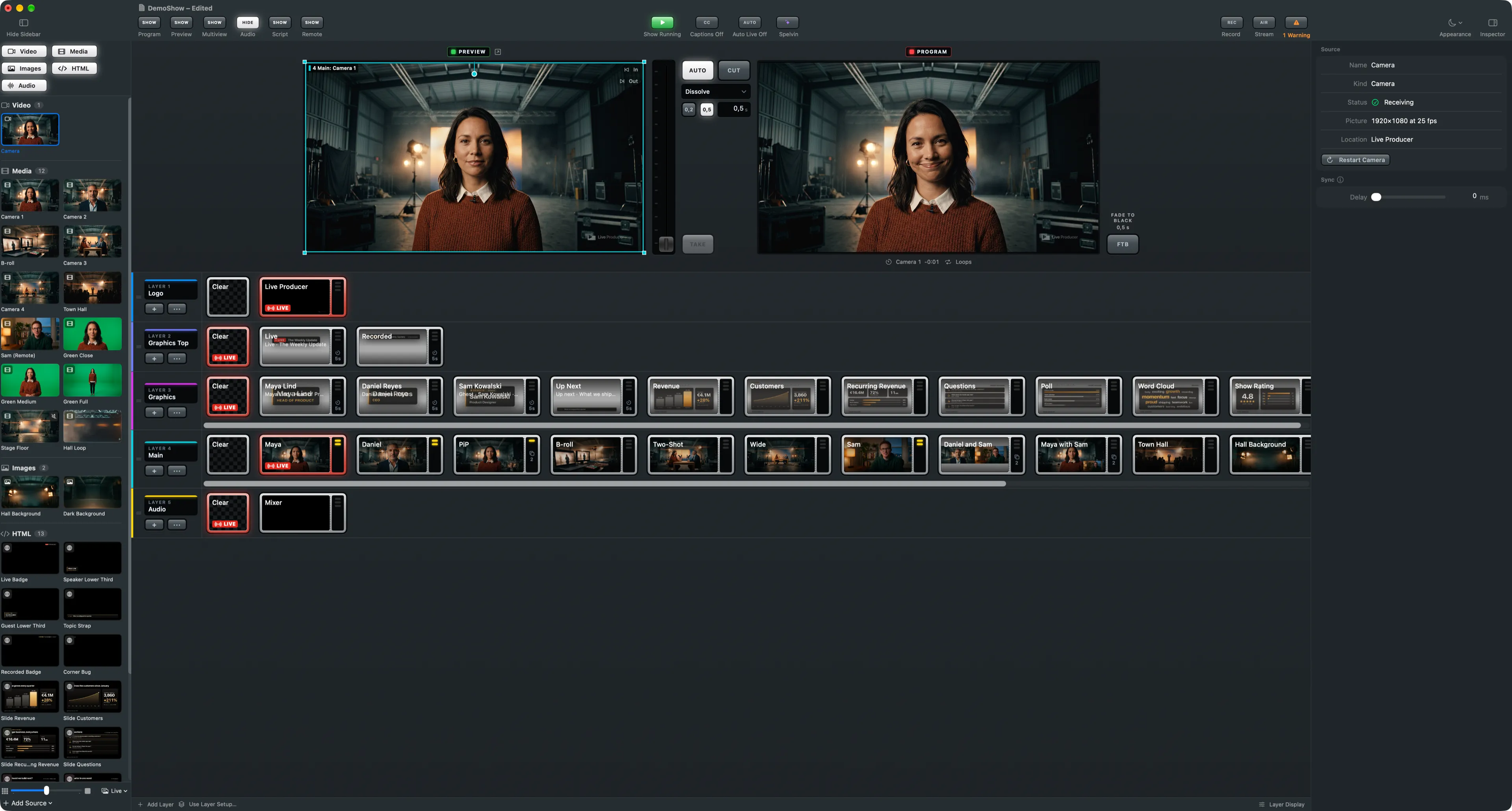
Cameras on this Mac, NDI sources on the network and DeckLink inputs: the Video group of the sidebar.
The Video group of the sidebar holds the live video inputs: cameras connected to this Mac, NDI sources on the network and DeckLink capture inputs. Each is one source, used in as many shots as you like.
Cameras
Section titled “Cameras”Any camera macOS sees is offered under Cameras in the Add Source menu: a built-in camera, a USB webcam, or a capture device that presents itself as a camera. The first time a camera source starts, macOS asks for permission to use the camera. See Permissions.
A camera carries no sound. Its microphone is a source of its own, in the Audio group.
Frame rate
Section titled “Frame rate”The inspector’s Picture row shows the size and the rate the camera sends, live. A camera fits the show when it runs at the show’s rate or a whole multiple of it: 50 into 25, 59.94 into 29.97. The Studio asks every camera for the show’s rate at 1080 lines and takes the nearest rate the camera has when it lacks that one.
When the camera does not fit, a warning under Picture names both rates and the fix: the show rates this camera’s formats allow, so you can set the show to one of them in Settings › This Show › Recording. A camera set to one rate that sends fewer frames is in a dim room: give it more light, or set the show to the rate it sends.
NDI and DeckLink
Section titled “NDI and DeckLink”NDI sources and DeckLink inputs need their maker’s software on this Mac. Without it, Add Source lists NDI Source and DeckLink Input greyed out, under Requires an SDK That Isn’t Installed.
Status and sync
Section titled “Status and sync”The inspector’s Source section says at a glance whether a camera delivers:
- Status: Receiving, or what is wrong. Not receiving when the camera is still there but sends nothing, for example because another app took it. Camera disconnected when it was unplugged. Camera not connected when the show names a camera this Mac does not have.
- Picture: what the camera sends now, its size and the frames of the last second, read four times a second. A dip is a stutter.
- Location: the camera as macOS names it. Hold the pointer on it for its ID.
A camera that is unplugged keeps its last picture on the program and comes back by itself when you plug it in again, on any port. A camera that stops sending is set up again by the Studio after five seconds, three times at most; Restart Camera does it at once, in Switcher › Restart Selected Camera, the tile’s right-click menu or the inspector. A source whose own camera is away shows nothing and never another camera.
Delay in the Sync section holds a source back so it lines up with slower ones; one frame at 25 fps is 40 ms.
Stand-ins for cameras
Section titled “Stand-ins for cameras”A show built before the cameras are there carries camera stand-ins, such as Camera 1 and Camera 2. Link each to a real camera once it is connected. See Stand-ins.
Read more
Section titled “Read more”Describes Live Producer 0.330 · 10 November 2026